Thermal Energy Storage: Part 4 — Integration of TES in Virtual Power Plants
- Andreas Zemelka
Integration of Thermal Energy Storage (TES) in Virtual Power Plant (VPP)
As discussed in the previous articles, particularly Thermal Energy Storage – Parts 1 and 2, heat supply is not the only potential function of Thermal Energy Storage (TES). An electrically charged TES can also contribute to balancing electricity supply and demand. By adjusting its charging power according to grid conditions, it can provide flexibility and potentially generate additional revenue for its owner or operator.
One of the major responsibilities of a transmission system operator is to maintain the continuous balance between electricity generation and consumption. Three commonly used types of balancing reserves are:
- Frequency Containment Reserve (FCR): Fast, automatic response to stabilize grid frequency—full activation within 30 seconds.
- automatic Frequency Restoration Reserve (aFRR): Automatically adjusts power to restore the electricity-system balance—full activation within 5 minutes.
- manual Frequency Restoration Reserve (mFRR): Activated on the transmission system operator’s request to address imbalances and relieve aFRR—full activation within 12.5 minutes.
Note:
These activation times refer to the German balancing market; requirements may differ in other markets.
An electrically charged TES, such as the concept presented in “Thermal Energy Storage – Part 2,” could potentially participate in these services, provided that it meets the requirements of the respective balancing product.
Depending on its operating condition, charging schedule and available storage capacity, TES can provide flexibility in both directions without generating electricity:
- Negative balancing: Increasing charging power to absorb more electricity from the grid.
- Positive balancing: Reducing or interrupting scheduled charging to reduce electricity consumption.
As a historical reference, information obtained during research between 2021 and 2023 indicated potential annual compensation in the order of EUR 100,000 per MW of available balancing capacity (see Note below).
Note:
The indicative value of approximately EUR 100,000 per MW per year is based on publicly available market information and discussions with several Virtual Power Plant operators conducted during the preparation of this article between 2021 and 2023. It is provided solely as a historical reference and to indicate the approximate potential scale. Actual revenues may vary considerably depending on the country and market, balancing product, market prices, available capacity, operating profile, activation frequency, and applicable technical and prequalification requirements. The figure should not be understood as a current market value or revenue forecast.
In addition to balancing services, TES charging can potentially be optimized through participation in day-ahead and intraday electricity markets. These markets are complex and differ considerably from country to country. How can a TES owner or operator participate while remaining focused on its core business or industrial process? One possible solution is integration into a Virtual Power Plant (VPP).
Integration of Thermal Energy Storage (TES) into a Virtual Power Plant (VPP)
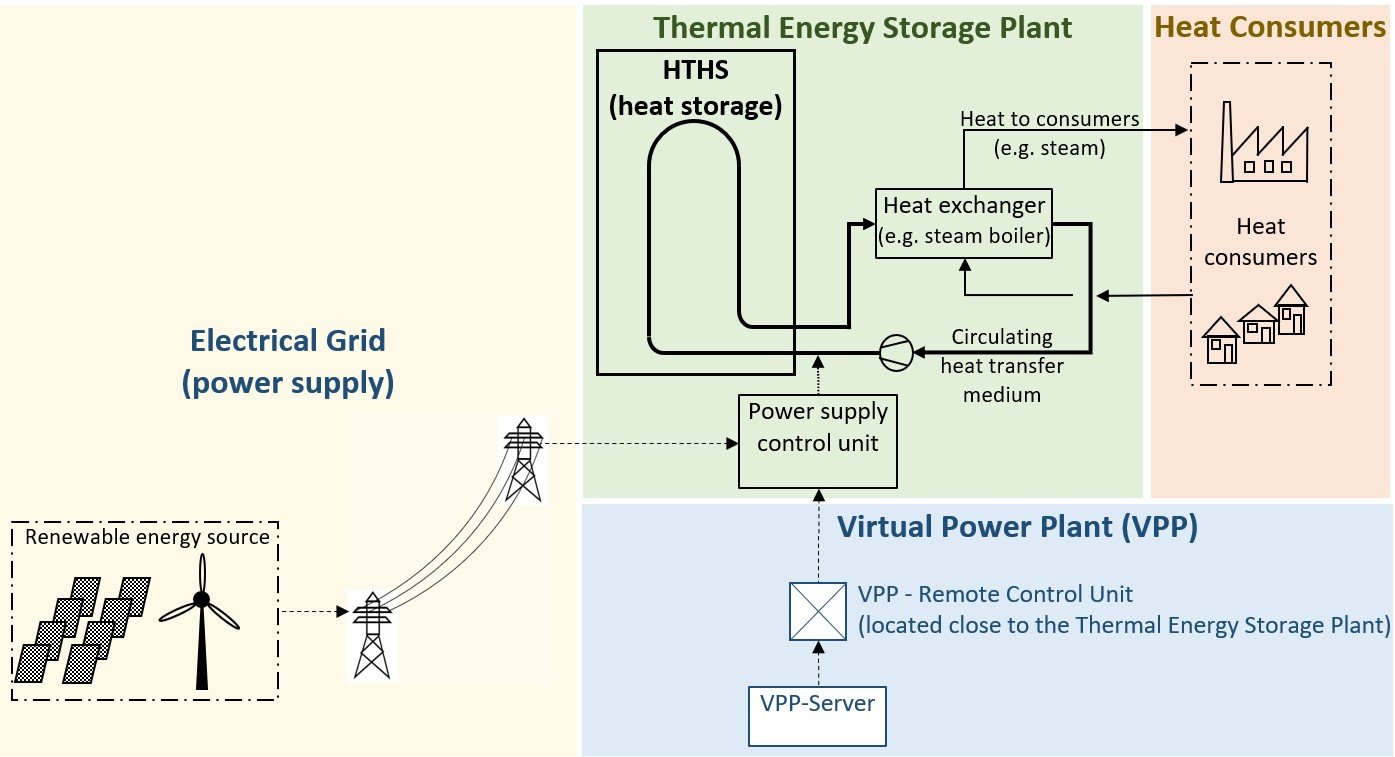
Fig. 1 Integration of Thermal Energy Storage (TES) into a Virtual Power Plant (VPP)
A Virtual Power Plant (VPP) is a digitally coordinated network that aggregates decentralized generation units, storage systems and flexible electricity consumers. Through centralized monitoring, forecasting and control, the aggregated assets can potentially participate in electricity and balancing markets that may not be readily accessible to individual small- or medium-sized assets.
For TES, integration into a VPP may enable charging to be scheduled according to electricity prices, grid conditions, renewable-energy availability and the thermal requirements of the heat consumer. Its flexible charging demand may also be offered to electricity and balancing markets, subject to the applicable technical, contractual and prequalification requirements.
Based on the agreed operating parameters and the heat-demand profile, the VPP operator can coordinate the TES charging process through an appropriate control interface. This allows the TES owner or operator to benefit from market participation without having to establish all the required electricity-market capabilities internally. The respective responsibilities, operational limits and remuneration model would need to be defined contractually.
Integration into a Virtual Power Plant can therefore provide a practical route for utilizing TES flexibility in electricity and balancing markets. The VPP operator can provide the necessary market interface, forecasting, scheduling, bidding and operational coordination, allowing the TES owner or operator to focus on its primary thermal-energy requirements while potentially generating additional revenue from the flexible use of the asset. At the same time, flexible TES charging can contribute to grid balancing and the integration of variable renewable generation. The technical and commercial feasibility will nevertheless depend on the TES configuration and operating profile, applicable market rules, electricity-price structures and prequalification requirements.
#EnergyTransition #Decarbonisation #ThermalEnergyStorage #TES, #FlexibilityTrading, #Balancing energy, #ThermalEnergyStoragePart1, #ThermalEnergyStoragePart2, #ThermalEnergyStoragePart3