Unconventional Projects – A Project-Specific Approach
- Andreas Zemelka
Let’s start with two well-known problems that apparently have little in common:
1. Thermal Energy Requirements and Carbon Emissions
According to the IEA, heat is the largest energy end use, accounting for approximately 50% of global final energy consumption and contributing around 40% of global CO₂ emissions. Approximately half of the energy consumed for heat is used by industrial processes, while around 46% is consumed in buildings. Despite ambitious decarbonization objectives, fossil fuels continue to dominate heat supply.
2. Stabilization of Power Transmission Grids
Dynamic changes in electricity supply and demand, combined with the growing share of fluctuating renewable energy sources, present power transmission grids with increasing challenges. Grid operators are therefore required to apply different measures to maintain the continuous balance between electricity supply and demand.
The first problem can be addressed by increasing the use of renewable electricity for heat generation. Electrical energy, which can be efficiently transmitted and distributed, can be brought close to the thermal process and converted into heat.
However, increasing the share of variable renewable energy also creates challenges for transmission grids due to fluctuations in wind and solar generation. One of the measures used to maintain grid stability is curtailment, whereby available renewable generation is reduced because the grid cannot accommodate the electricity at that particular time. In practical terms, this means that potentially available renewable energy remains unused.
At the same time, the specific consumption patterns of industrial and other heat users can create additional peaks and fluctuations in electricity demand if heat generation is directly electrified.
Another challenge is that, in many sectors, wind and solar energy are still perceived as unreliable because their availability depends on weather conditions.
One effective way of addressing these challenges is the deployment of thermal energy storage (TES) charged with electrical power. Such a system allows the TES to be charged when electricity demand is low, when electricity prices are favourable, or when surplus renewable electricity is available. The stored thermal energy can then be released and supplied to the thermal process according to actual demand.
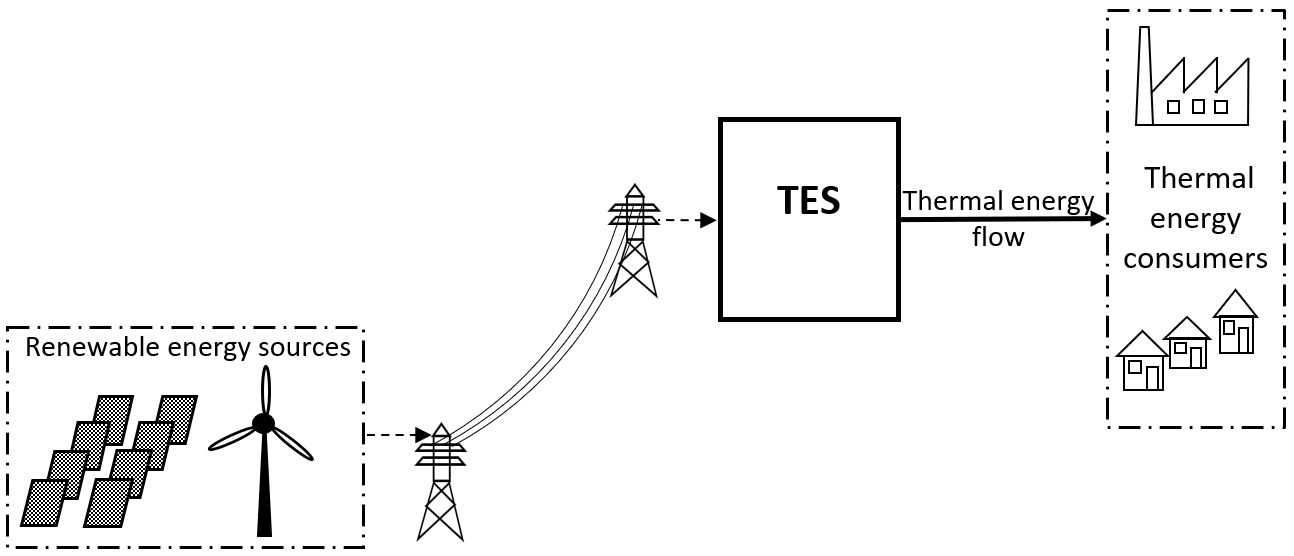
On the one hand, such a TES can reliably supply low-carbon heat or cold to industrial processes or buildings. When charged with renewable electricity, the stored thermal energy can potentially be supplied with very low associated CO₂ emissions. At the same time, consumers become less dependent on the availability and fluctuating prices of fossil fuels.
On the other hand, TES can act as a flexible electricity consumer: charging can be started, stopped or adjusted according to grid conditions. This flexibility can support power transmission grids in balancing electricity supply and demand.
Main TES Advantages in Brief:
- Reliable and potentially cost-effective supply of thermal energy to industrial processes and buildings
- Low-carbon thermal energy and, when charged from renewable electricity, the potential for substantially reducing associated CO₂ emissions
- Reduced dependence on the availability and price volatility of fossil fuels
- Contribution to the stabilization of power transmission grids through flexible electricity consumption
- Potential source of additional revenue for TES operators where participation in demand-response, balancing or other grid-service markets is available
- Support for the further integration of renewable energy by absorbing surplus electricity and thereby potentially reducing renewable-energy curtailment
Despite these advantages and the increasing need and policy pressure for decarbonization, thermal energy storage still does not appear to receive the attention its potential deserves.
Why is industry still hesitating?
Fascinated by this subject and its potential, I have been working on the development of a new thermal energy storage concept.
To be continued.